Slow Drains and Gurgling Toilets Across the House? Septic Warning Signs
July 31, 2026
What does liability coverage cover on an auto policy?
It covers the damage and injuries you cause to other people when you're at fault in an accident. It generally has two parts: bodily injury liability (others' injuries) and property damage liability (others' property, like their vehicle). It's the required foundation of an auto policy, protecting you financially from your responsibility to others on the road, up to your policy's limits.
Does liability cover my own car?
No, this is the most common misunderstanding. Liability covers damage you cause to others' property, not your own vehicle. If you're at fault, your liability handles the other party's car, not yours. Coverage for your own car comes from separate coverages (commonly collision and other-than-collision coverage). Having liability alone does not mean your own vehicle is covered after an accident.
Does liability cover my own injuries?
No. Liability covers injuries you cause to other people, not your own medical costs. Coverage for your own injuries comes from separate coverage types (such as medical payments or personal injury protection, depending on the policy and where you live). Like your own vehicle, your own injuries require coverages beyond liability, which is part of why policies include more than just liability.
What are the two parts of liability coverage?
Bodily injury liability and property damage liability. Bodily injury liability covers injuries you cause to other people (the other driver, passengers, pedestrians) in an at-fault accident. Property damage liability covers damage you cause to others' property, most often their vehicle, but also things like fences or buildings. Together they cover the injuries and property damage you cause to others when you're at fault.
Why is liability required but it doesn't cover me?
Because liability exists to cover your responsibility to others, the harm you might cause them, which is why it's typically required to drive. It's outward-facing by design. Protecting yourself and your own vehicle is the purpose of other, separate coverages you can carry. So liability being required ensures others are covered when you're at fault; covering yourself is a separate choice through additional coverages.
If I only have liability, am I covered in an accident?
Only for the harm you cause others when you're at fault, not for your own vehicle or injuries. With liability alone, an at-fault accident would leave your own car repairs and your own injuries uncovered by that policy. That's why many drivers carry additional coverages. Understanding this gap is important, "I have liability" is not the same as "I'm covered for everything."
How do I know what my policy actually covers?
Review it with a licensed insurance agent. Because requirements, limits, and the specific coverages on your policy depend on your situation and your state, an agent can explain exactly what your liability limits are, what other coverages you have or don't, and what your overall protection looks like. This article explains liability in general terms; for your specific policy and decisions, an agent who can look at your situation is the right resource.
Quick Answer: When drains slow down and toilets gurgle all over the house at the same time, the problem is almost never a clog in one fixture. It points to the shared line every drain empties into, which means the septic tank or the drain field. A tank full of sludge and scum, a blocked outlet baffle, or a saturated field can all push backpressure and trapped air up the plumbing. Gurgling and slow drainage across multiple fixtures is an early warning, and reading it correctly is what separates a routine pump-out from a failed field.
The dishwasher takes forever to empty. The tub in the back bathroom drains like it is thinking about it. Then the toilet down the hall burps and bubbles every time somebody runs the washing machine. You take a plunger to one fixture, pour something down another, and nothing changes, because the trouble is not in any one of them.
Here is the rule that matters. One slow drain is a plumbing problem. Every drain slowing down at once is a septic problem. All the fixtures in your house share one main line out to the tank, and when several of them start acting up together, the fault has to be somewhere downstream of all of them. That is the tank, the outlet, or the field. What follows is how to read the signals, what the different symptoms actually mean, and why waiting on this particular one gets expensive fast.
Why Gurgling Means Something Very Specific
That bubbling noise is not the drain complaining. It is air.
Your drain system is built to move water and air in a balanced way. Wastewater flows down and out, while the vent stack on your roof lets air in behind it so nothing has to pull a vacuum. When the line downstream is restricted, that balance breaks. Water backing up in the main line or the tank traps air in the pipe, and the only place that air can escape is up through the water seal in the nearest trap, usually the lowest toilet or tub in the house. The result is the glug-glug you hear when a fixture somewhere else is draining.
The lowest fixture talks first
Physics puts the pressure at the bottom. A basement bathroom, a first-floor tub, or a toilet on the low side of a slab will gurgle and back up before anything upstairs does, because gravity carries the backpressure to the lowest opening. If your downstairs tub gurgles when the upstairs shower runs, the two fixtures are telling you they share a restricted outlet.
Whole-house timing is the giveaway
Pay attention to when it happens. Gurgling that starts right after a heavy water event, such as several loads of laundry, a long shower, or a full dishwasher cycle, tells you the system can no longer take a surge. It is running so close to its limit that a normal household load pushes it over.
Odor rides along with the air
If the air escaping through a trap carries a sewer smell into the bathroom, the trap seal is being disturbed and gas from the drain line is coming with it. That is a stronger signal than the noise alone, and it usually means the restriction has been building for a while.
What Is Actually Happening Underground
Slow whole-house drainage traces back to one of a handful of conditions, and they are not equally urgent.
The tank is full of solids
A tank separates its contents. Heavy solids sink into a sludge layer, grease floats into a scum layer, and the clear liquid between flows to the field. Both keep growing. A tank is due when scum sits six inches from the outlet or sludge within twelve. Past that, drains slow.
The outlet baffle or effluent filter is blocked
Every tank has a T-shaped outlet, and many a filter, whose job is keeping solids from escaping. When that outlet chokes with scum or the filter loads, the tank cannot discharge, the level rises above the outlet, and the main line backs up. It can stall a system not full.
The drain field is not accepting water
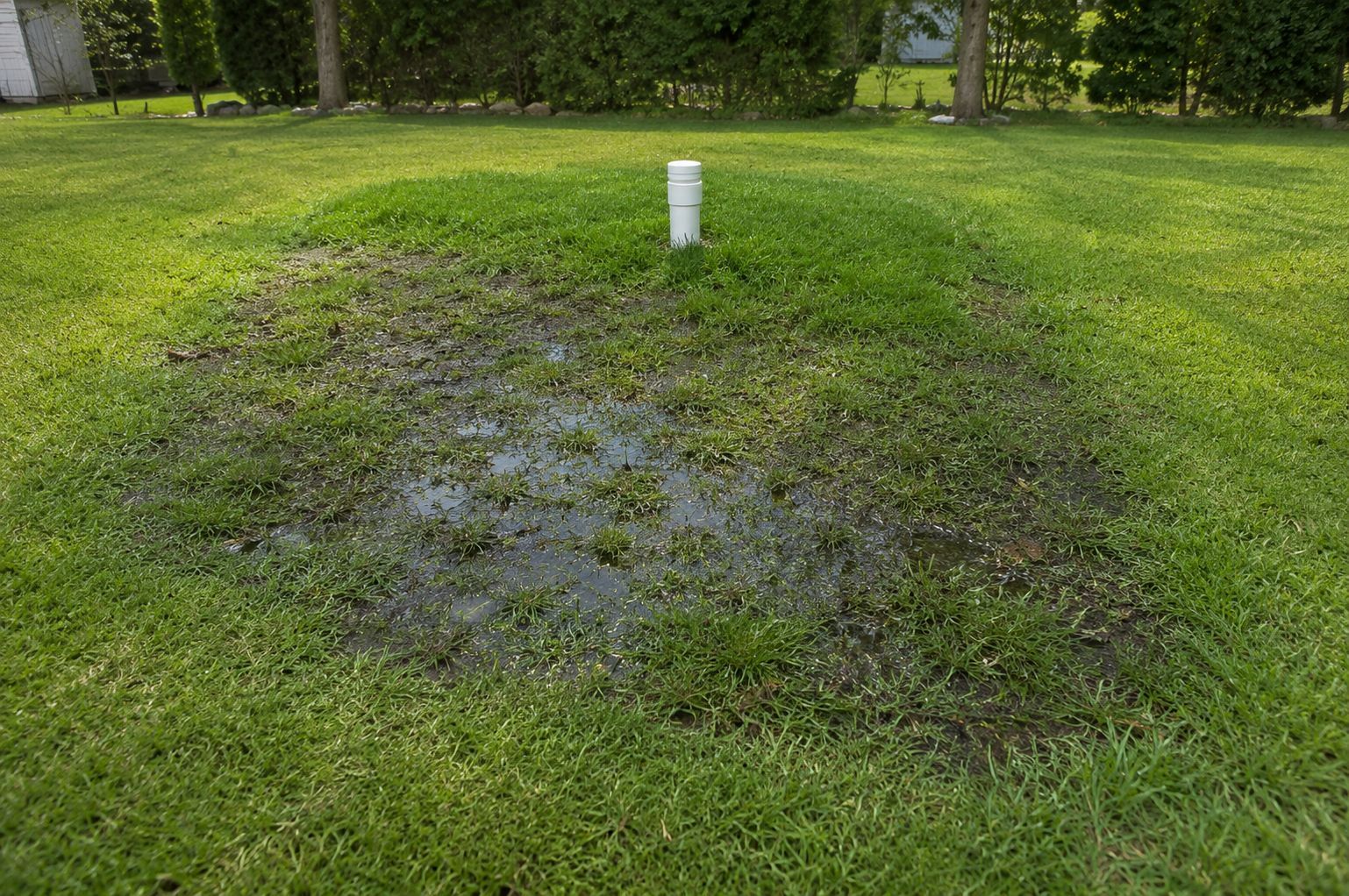
This is the serious one. Effluent has to soak into the soil. Over years, a bacterial layer called a biomat builds along the trenches, and when solids escape, it thickens until the soil stops absorbing. If the field will not take water, the tank stays full and drains slow down.
The lines are physically obstructed
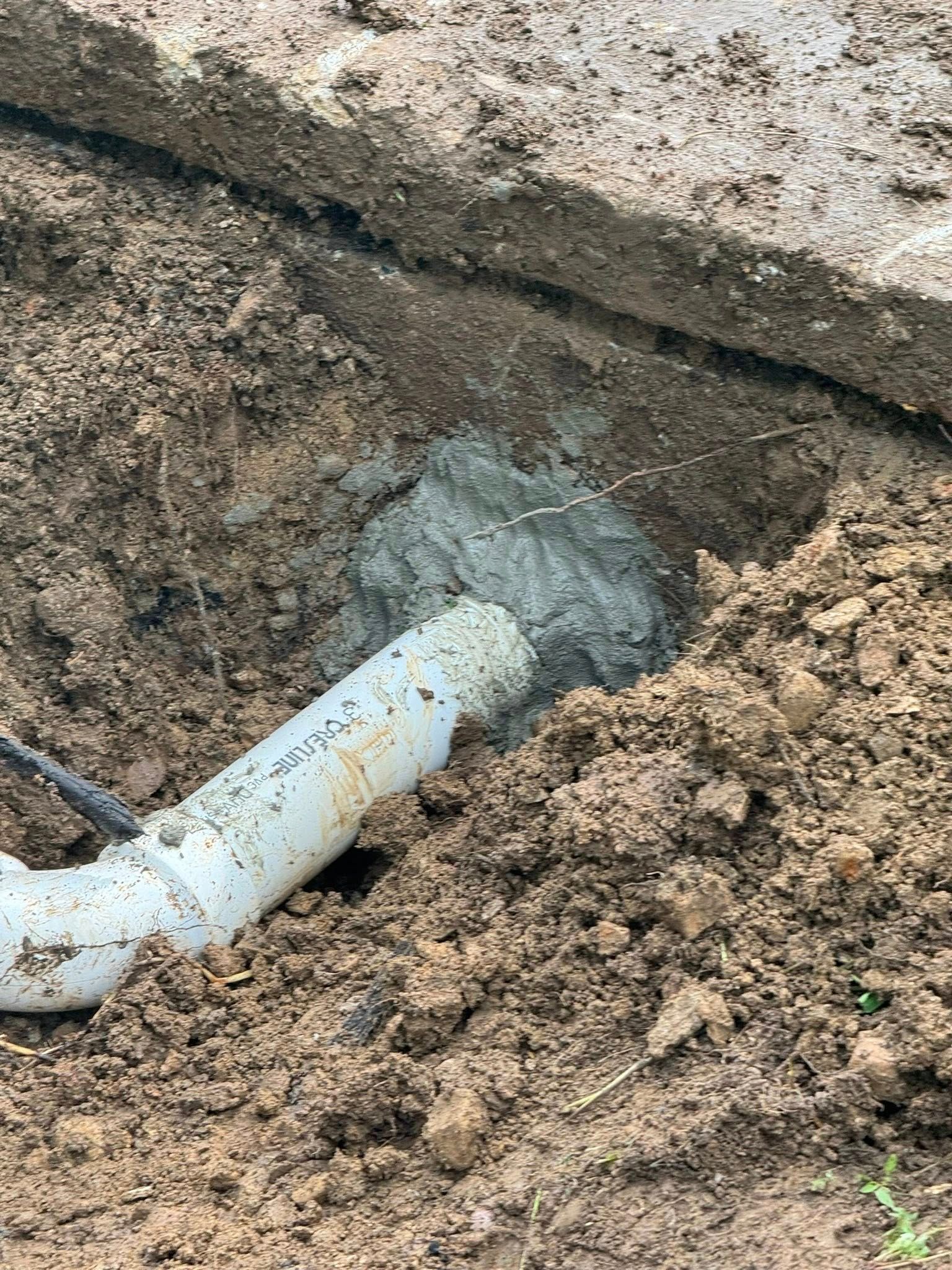
Roots find moisture, and a small crack or joint in a field line is an invitation. Root mass, a crushed line, or a collapsed pipe restricts flow the same way a clogged field does, and from inside the symptoms look identical. Locating it separates line repair from a field problem.
Tip: Before you call anyone, spend two minutes writing down what you observe. Which fixtures are slow, which ones gurgle, and what water use sets it off. Note whether the ground over the tank or the field is soft, whether the grass there is greener than the rest of the yard, and whether anything smells outside. That short list narrows the diagnosis fast and can be the difference between confirming a full tank in twenty minutes and spending an hour hunting for the cause.
The Line Between a Pump-Out and a Failed Field
This is the question every homeowner in this situation wants answered, and the honest answer is that the symptoms overlap, which is why a look inside the tank matters.
If the tank is simply full, the sludge and scum levels tell the story immediately and pumping restores flow. If the tank sits at a normal level but the house still drains slowly, the outlet or the filter is the suspect. If the tank refills to the outlet almost immediately after pumping, or if liquid is standing over the field, the field is not accepting water, and pumping alone buys you a few days at best. Pumping a tank to relieve a failing field is like emptying a bucket with a hole in the bottom. It works right up until it does not.
A pump-out that does not hold is diagnostic
When a homeowner says the tank was pumped a month ago and the drains are already slow again, that is not bad luck. That is the field telling you it cannot take the volume, and it changes what happens next.
A restricted field is not automatically a replaced field
A clogged field can often be restored rather than dug up, depending on what is choking it. Roots clear and lines open. A biomat that built up because solids escaped a full tank breaks down once the source is fixed.
Warning: Do not respond to slow drains by pouring chemical drain openers or additive products into the system. Caustic drain cleaners kill the bacteria your tank depends on to break down solids, and they do nothing about a full tank, a blocked outlet, or a saturated field. Additives marketed as a substitute for pumping are not a substitute for pumping, and relying on them instead of servicing the tank can push solids straight into the field and turn a maintenance call into a field failure. Never enter a septic tank for any reason, and keep children and pets away from any lid that is cracked, loose, or sunken.
What Keeps It From Coming Back
Once flow is restored, the habits that got you here are the ones worth changing.
Water use is the biggest lever you control
Everything you send down a drain lands in the tank. Indoor use runs as high as seventy gallons per person daily, and one running toilet adds two hundred. Wastewater needs two to three days to separate, so spread laundry out.
What you flush decides how fast the tank fills
Human waste and toilet paper are the whole list. Wipes, paper towels, hygiene products, coffee grounds, cat litter, grease, and oil either do not break down or build up the scum layer. Grease is quiet, cooling and reaching the outlet.
Pumping on a schedule beats pumping on symptoms
A typical tank needs service every three to five years, sooner with a large family, heavy water use, or a disposal. By the time drains gurgle, the system has already run past its comfortable limit. Schedule pumping before symptoms show.
A riser turns service into a non-event
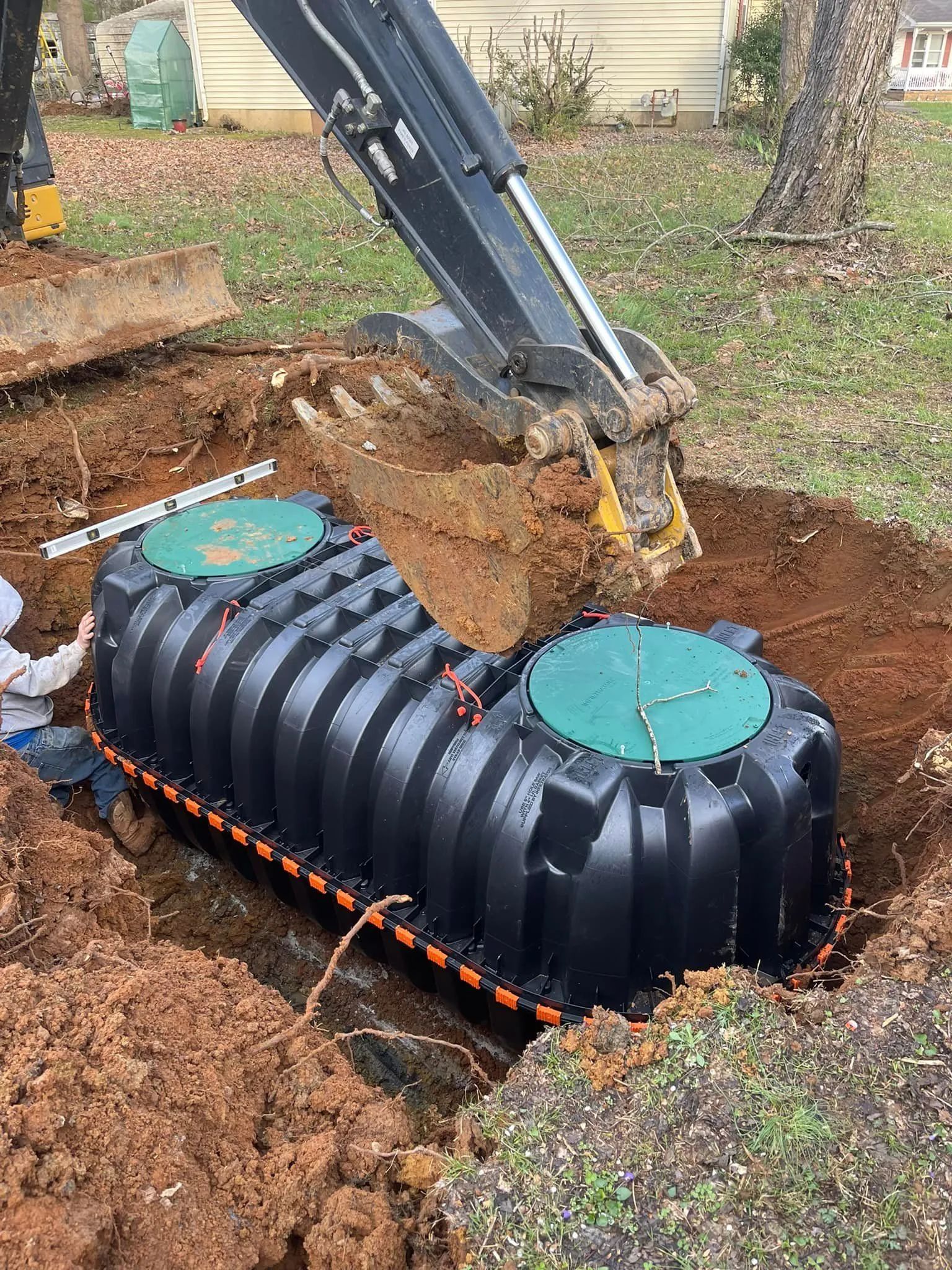
If your lids are buried under a foot of dirt, every service call starts with digging. A riser brings the access ports to grade with a secure lid, so the tank is opened, measured, and pumped without disturbing the yard.
Frequently Asked Questions
Is a gurgling toilet always a septic problem?
Not always. A single gurgling toilet can come from a blocked vent or a partial clog in that branch. What points to septic is the pattern: multiple fixtures gurgling or draining slowly, especially the lowest.
My drains got better on their own. Is the problem gone?
No. Drainage that comes and goes usually means the system sits at its limit, recovering overnight while nobody uses water. A tank near capacity keeps clearing between uses until it does not. Intermittent means early.
Can I just have the tank pumped and be done with it?
Sometimes, and that is best. If the tank is full and the field sound, pumping restores flow. But if it refills quickly, the field is not accepting water, and pumping will not hold. Measure both.
How do I tell the difference between a full tank and a failing drain field?
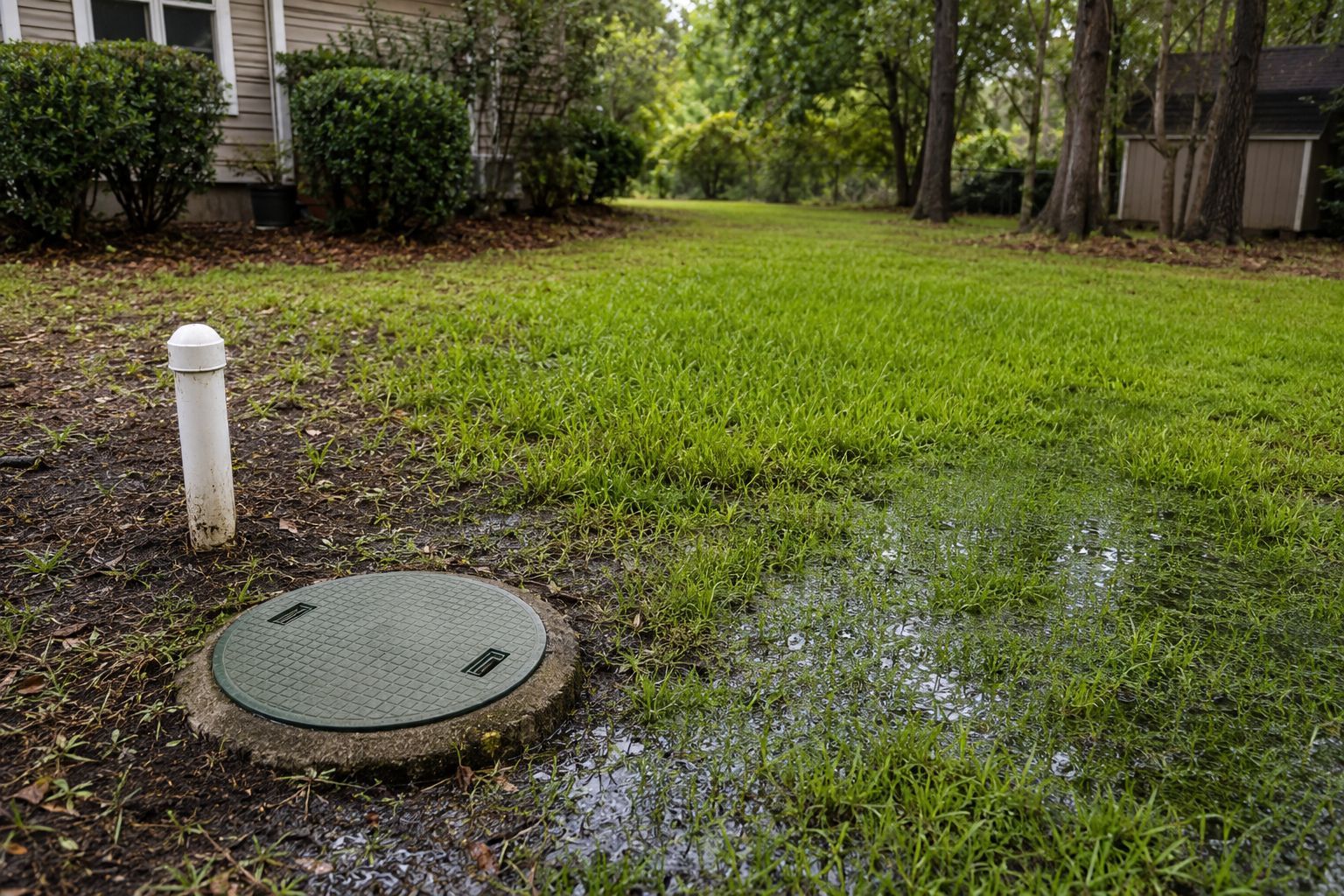
From inside you often cannot, which is frustrating. Outdoor signs help: soggy ground over the field, sewage odor outside, or grass noticeably greener there. Those point to the field. A dry yard suggests the tank.
Does heavy rain by itself cause slow drains on a septic system?
Rain saturates the soil and reduces how much wastewater it absorbs, pushing a marginal system into backing up. A healthy field handles a wet week. If yours backs up every hard rain, capacity is short.
How urgent is this? Can I live with it for a few months?
Living with it turns a manageable problem expensive. When a tank is too full to separate solids, they escape and clog the field, a harder repair than pumping. Slow drains warn you before a backup.
Reading the Warning Instead of Waiting on It
Whole-house slow drains and gurgling toilets are the septic system's early warning, and they are worth respecting for exactly that reason. The noise is air being forced back up your plumbing because something downstream is not moving water the way it should, and there is a short list of causes: a tank full of sludge and scum, a blocked outlet or filter, roots or a crushed line, or a drain field that has stopped accepting effluent. On rocky, clay-heavy Middle Tennessee lots with shallow soil over limestone, that list moves faster than it does elsewhere, and a wet week can turn a nuisance into a backup. The encouraging part is that a system caught at the gurgling stage usually still has options, including field restoration instead of replacement. A system caught after the backup often does not.
Get the tank opened and the field evaluated before the next backup. Slow drains and gurgling toilets mean something downstream has stopped moving water, and the right fix depends entirely on whether it is a tank full of solids, a blocked outlet, roots in the lines, or a field that has quit accepting effluent. Our crew measures sludge and scum levels, checks the outlet and baffles, pumps what needs pumping, and evaluates whether a struggling field can be restored rather than replaced, then sets a riser so the next check is simple. Scotts Septic Tank Service, based in Christiana, Tennessee, has worked on Middle Tennessee septic systems for 60+ years, and gives you an honest read on what your system needs and what it does not. Reach out to schedule an inspection and get ahead of it.