Expert Septic Tank Repair: Restoring Your System Without Replacing It
June 29, 2026
The toilet gurgles before it flushes. The shower drains slow, then slower, and one morning there is a soft, damp patch in the back yard that never quite dries out. Maybe a faint sewer smell drifts up when you mow. You are already bracing for the worst: the whole yard torn open, a new system going in.
Here is what you need to know first. A failing
septic system almost never means you need a whole new one. Most of the trouble we get called for traces back to a single point of failure that can be repaired with a fraction of the disruption a replacement causes. A clogged outlet, a corroded baffle, a stressed drain field, a root in the line. All fixable. The trick is reading the symptoms right before anyone digs, because a wrong guess turns a half day repair into a project that never needed to happen.
What to do the moment you notice trouble
Stop putting water into the system. Every flush, wash, and long shower pushes more liquid into a tank already struggling to keep up. Cut back hard until you know what you are dealing with.
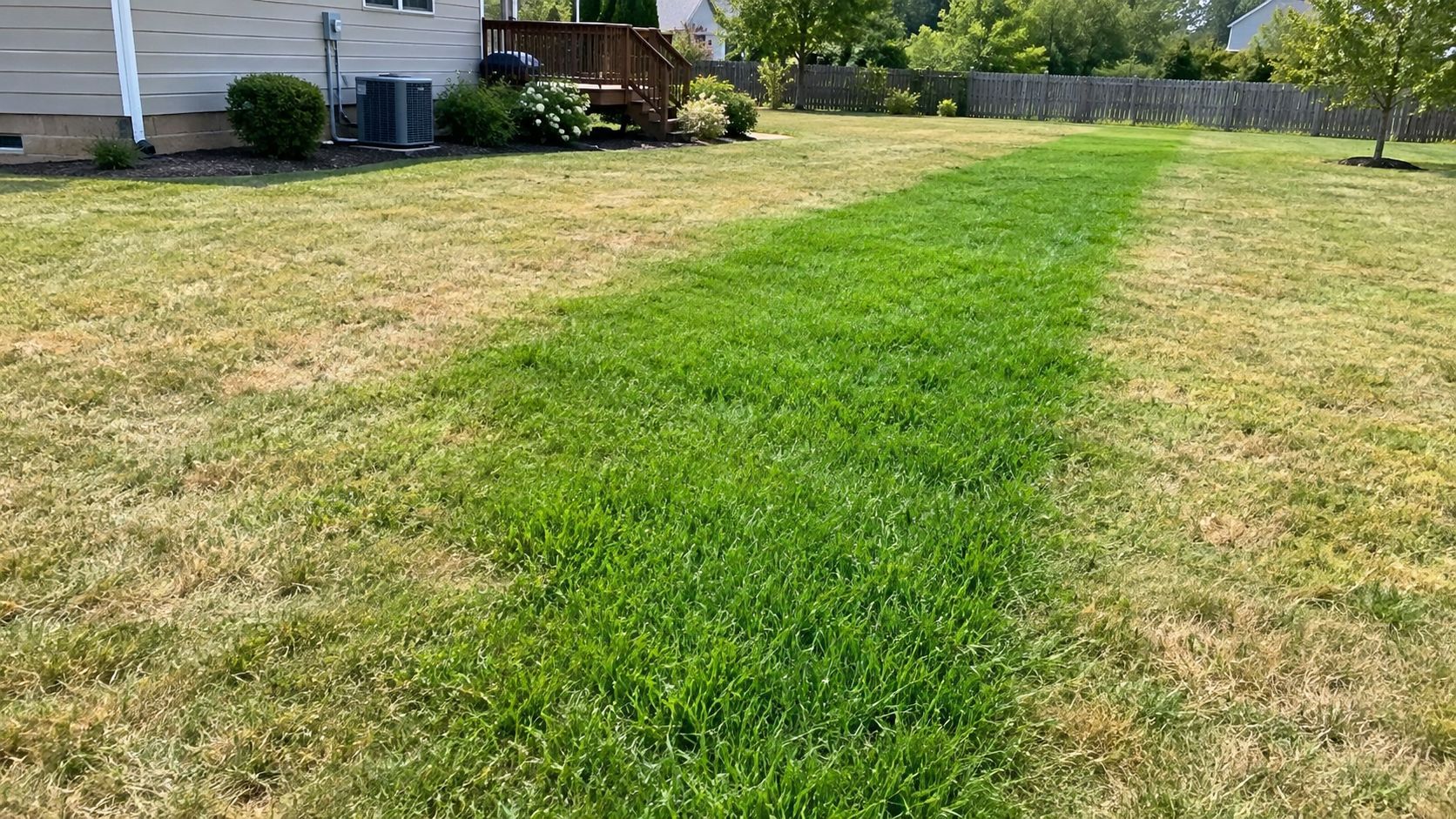
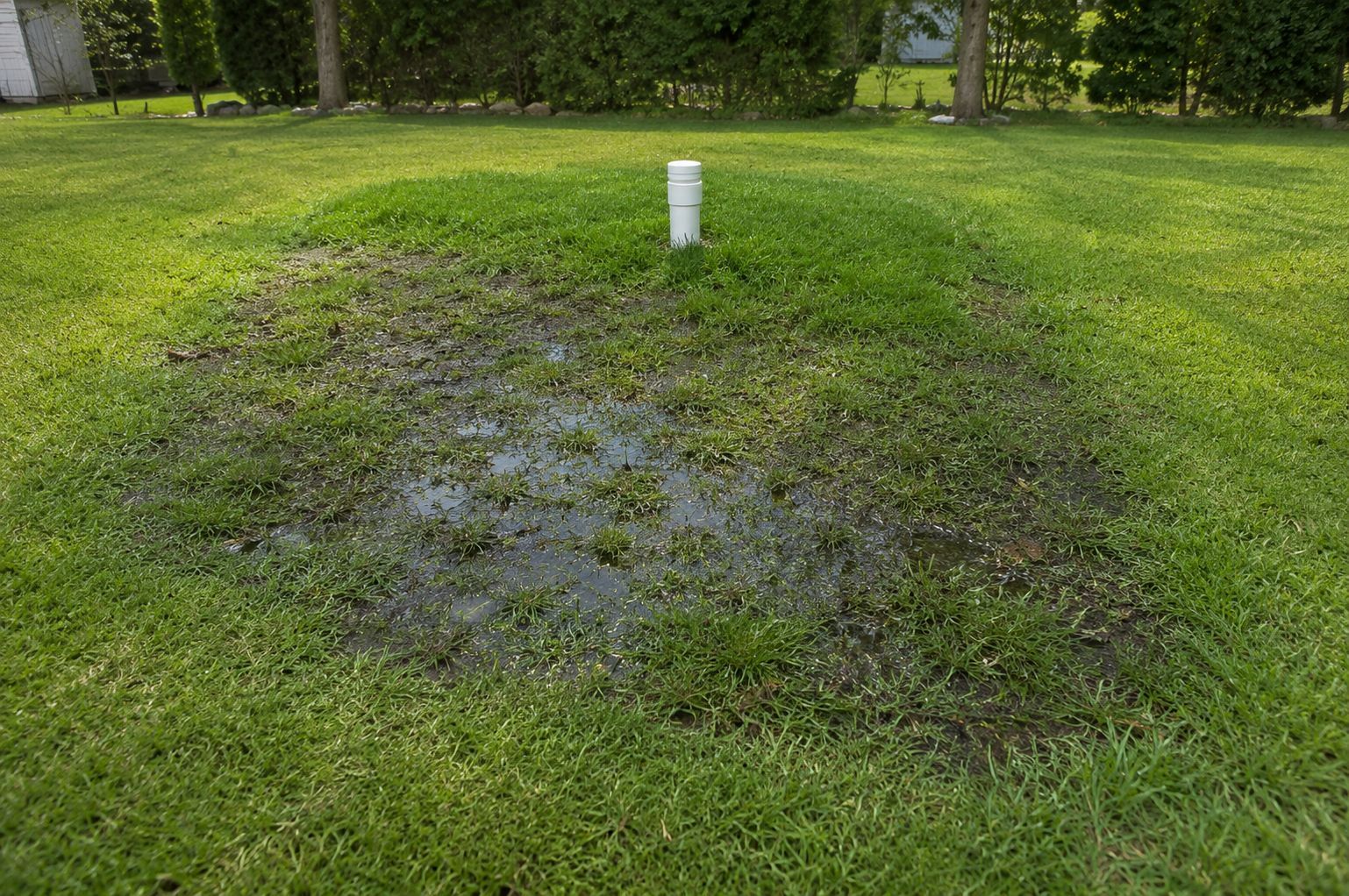
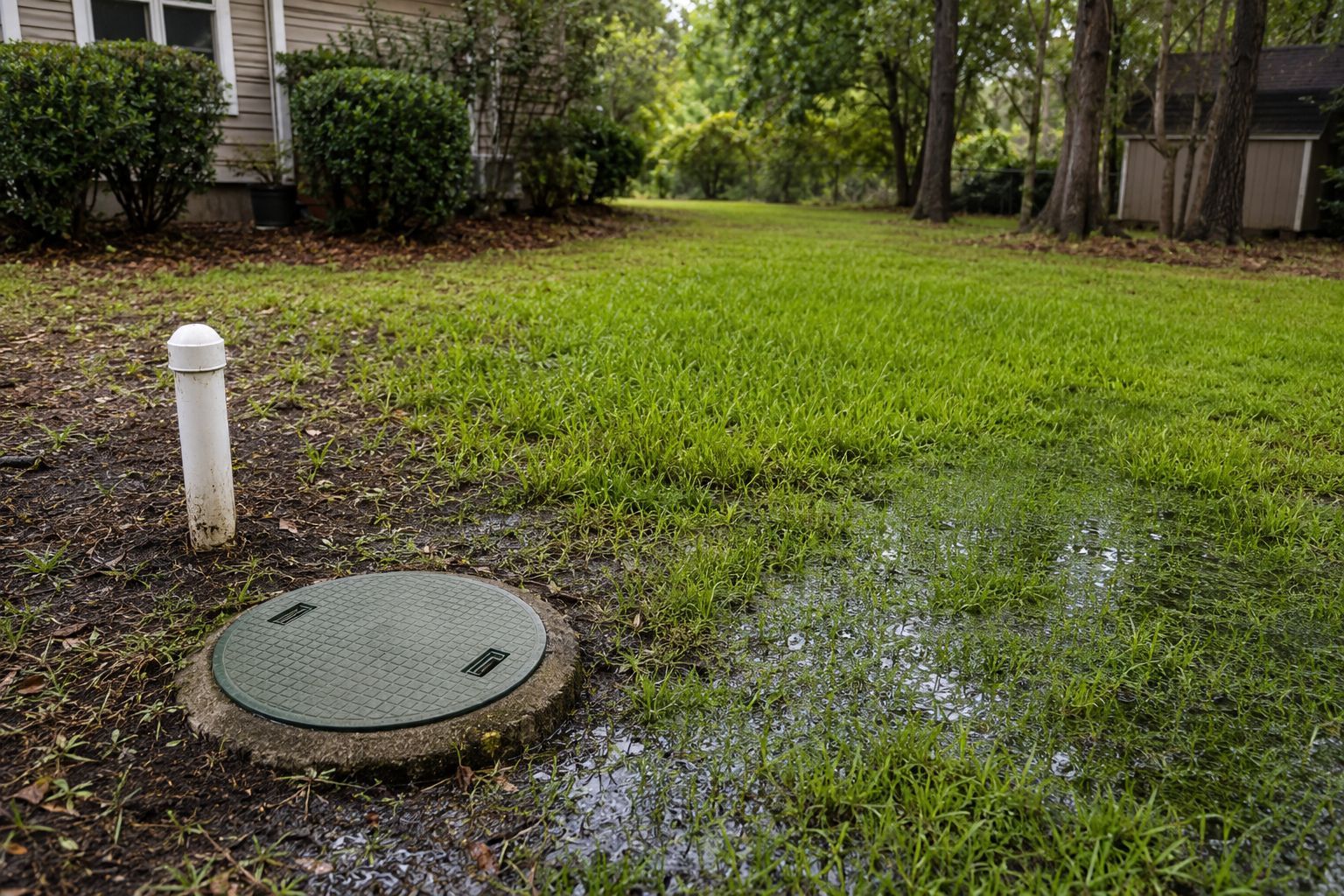
Then walk the yard. Look for wet ground, bright green grass, or a spongy spot over the tank or drain field, and note whether one fixture backs up or all of them. One slow drain points at a house line. A whole house backup points at the tank or beyond.
WARNING: Never open a septic tank and lean in, and never let anyone climb inside. The gases in a sealed tank, including hydrogen sulfide and methane, can knock a person unconscious in seconds and have killed homeowners doing this. If you see standing sewage, keep kids and pets clear of it.
TIP: Pull your pumping records before you call anyone. If it has been more than four years since the last pumping, that one fact narrows the cause fast.
What is actually going wrong down there
Most repairs we run start with solids where solids should never be. A tank lets waste separate: sludge sinks, scum floats, and clear liquid flows out to the drain field. When the tank gets too full because pumping was skipped, that clear layer disappears and solids ride out into the field lines. Once those lines clog, the field cannot absorb water and everything backs up.
The outlet baffle is the next suspect. Older concrete tanks across Rutherford County have baffles that corrode over 20 to 30 years as sewer gas eats at the concrete. When a baffle crumbles, scum slides straight into the field. Same clogged field, but the cause sits inside the tank.
Then there are the lines. Tree roots from the cedars and hardwoods common around Christiana find pipe joints and grow into them, choking flow a little more each season. A pipe can also belly where the ground settled, trapping solids in a low spot. Both feel like a tank problem from inside the house, but the fix is out in the run.
How we find the real problem
A proper diagnosis starts at the tank with the lids off and the levels measured. The liquid level tells a story. Too high means the outlet or field is blocked. Normal level with slow drains points back toward the house line. From there we probe the baffles, check the effluent filter if one is fitted, and camera the lines when the path is unclear. On service calls we frequently find a filter nobody knew existed, packed solid after years without a cleaning. That is a 15 minute fix mistaken for a failed system.
Repairs that restore your system instead of replacing it
Pumping and a filter cleaning solve more problems than any other single step. If solids overflowed because the tank was overdue, pumping it out and rinsing the effluent filter often brings flow back the same day. You can clean that filter yourself going forward, hosed off over the open tank, no entry required.
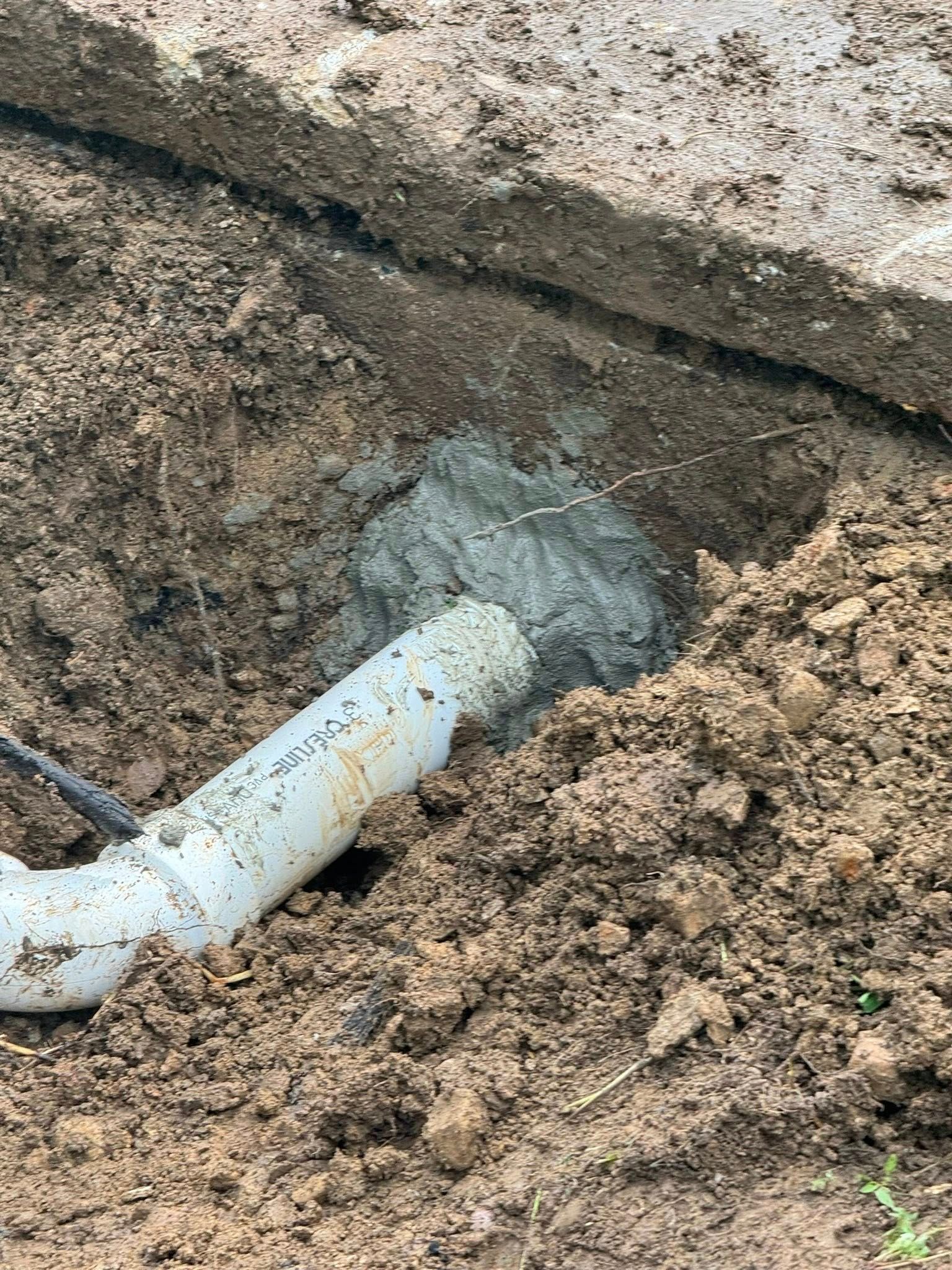
Baffle replacement comes next. We swap a corroded baffle for a sanitary tee, which keeps scum out of the field and protects the repair you just paid for. It is a half day job that buys the tank another couple of decades.
For clogged or root choked lines, hydro jetting cuts the blockage without trenching the whole run. When a field is saturated but not collapsed, aerating and jetting the laterals breaks up the biomat and brings absorption back, restoring what you already have rather than abandoning it.
Some repairs are yours to handle: cleaning the filter, replacing a cracked tank lid, fixing a leaky toilet flapper that floods the tank. Anything inside the tank, in the field, or in the lines belongs to us, because a wrong move there turns a repair into a replacement.
When repair holds and when it does not
Honest answer: sometimes a repair holds for 10 or 15 years, and sometimes it masks a field that is already done. Age and severity tell you which. A tank under 30 years old with a clogged but intact field is almost always worth repairing. A field saturated and backing up for years, especially in heavy clay, may be past the point where jetting helps. One blocked line or a failed baffle is a clean repair. Effluent surfacing across the whole field after every rain points to something deeper, and we tell you straight which one you have.
Why septic systems fail differently around Christiana
The clay soil under most of middle Tennessee is the single biggest reason local systems struggle. Clay drains slowly to begin with, so drain fields here sit closer to their limit than fields in sandy soil ever would. Add the shallow limestone bedrock common across the Central Basin and there is often less usable soil depth for a field to breathe.
Spring is the hard season. When the rains come and the water table rises, saturated clay stops accepting effluent, and a field that coped all summer suddenly surfaces. A system pumped on schedule and kept lightly loaded through wet spells holds up far better in this ground than one run at full tilt.
Keeping yours out of trouble
The cheapest repair is the one you never need. Pump the tank every three to five years for an average household, sooner if you run a garbage disposal or a full house. Clean the effluent filter once a year, and log every service so the next diagnosis takes minutes.
Watch the water in spring. Spread laundry across the week instead of running six loads on a Saturday, since a sudden surge during a wet spell is what pushes a clay field over the edge. Keep vehicles and new tree plantings off the drain field, because roots and compaction undo more good fields than age does. And never flush wipes or grease. The tank cannot break those down, and they start half the clogs we clear.
Frequently Asked Questions
Can a septic tank really be repaired instead of replaced?
Yes, in most cases. The majority of problems we see trace to one fixable point, a clog, a corroded baffle, a root, or a stressed field. Full replacement is the last resort, not the first answer, when the tank and field remain sound.
How do I know if my drain field is failing?
Watch for standing water or unusually green grass over the field, slow drains throughout the house, and sewer odor outside after rain. Surfacing effluent that returns every wet spell signals a stressed field. Catching these early often means a repair still works.
How long does a typical septic repair take?
Many repairs finish in a single day. Pumping with a filter cleaning takes a few hours, a baffle replacement runs about half a day, and line jetting is usually same day work. Drain field rejuvenation may need a return visit depending on saturation.
Is it safe to open my own septic tank?
No. Sealed tanks hold hydrogen sulfide and methane that can render a person unconscious within seconds, and falls into a tank are often fatal. Cleaning a filter from above ground is fine. Never lean in or enter, and keep children and pets clear.
Why do septic systems here fail faster in spring?
Middle Tennessee clay drains slowly, and shallow limestone limits soil depth. When spring rains raise the water table, saturated clay stops absorbing effluent, so a field that coped all summer suddenly surfaces. Lighter water use during wet weeks keeps local fields from tipping over.
Restore Your Septic System Without the Full Replacement
For more than 60
years, we at Scotts Septic Tank Service
have repaired far more systems than we have replaced, because reading the problem right usually means you keep the system you already have. Around here the clay and the wet springs make that diagnosis trickier and the timing more urgent than most homeowners expect. When your drains slow or the yard goes soft, call us before anyone digs. We serve all across Christiana, Tennessee and the surrounding areas.