Sewage Smell or a Wet, Spongy Patch Over the Drain Field? What It Means
August 13, 2026
What does liability coverage cover on an auto policy?
It covers the damage and injuries you cause to other people when you're at fault in an accident. It generally has two parts: bodily injury liability (others' injuries) and property damage liability (others' property, like their vehicle). It's the required foundation of an auto policy, protecting you financially from your responsibility to others on the road, up to your policy's limits.
Does liability cover my own car?
No, this is the most common misunderstanding. Liability covers damage you cause to others' property, not your own vehicle. If you're at fault, your liability handles the other party's car, not yours. Coverage for your own car comes from separate coverages (commonly collision and other-than-collision coverage). Having liability alone does not mean your own vehicle is covered after an accident.
Does liability cover my own injuries?
No. Liability covers injuries you cause to other people, not your own medical costs. Coverage for your own injuries comes from separate coverage types (such as medical payments or personal injury protection, depending on the policy and where you live). Like your own vehicle, your own injuries require coverages beyond liability, which is part of why policies include more than just liability.
What are the two parts of liability coverage?
Bodily injury liability and property damage liability. Bodily injury liability covers injuries you cause to other people (the other driver, passengers, pedestrians) in an at-fault accident. Property damage liability covers damage you cause to others' property, most often their vehicle, but also things like fences or buildings. Together they cover the injuries and property damage you cause to others when you're at fault.
Why is liability required but it doesn't cover me?
Because liability exists to cover your responsibility to others, the harm you might cause them, which is why it's typically required to drive. It's outward-facing by design. Protecting yourself and your own vehicle is the purpose of other, separate coverages you can carry. So liability being required ensures others are covered when you're at fault; covering yourself is a separate choice through additional coverages.
If I only have liability, am I covered in an accident?
Only for the harm you cause others when you're at fault, not for your own vehicle or injuries. With liability alone, an at-fault accident would leave your own car repairs and your own injuries uncovered by that policy. That's why many drivers carry additional coverages. Understanding this gap is important, "I have liability" is not the same as "I'm covered for everything."
How do I know what my policy actually covers?
Review it with a licensed insurance agent. Because requirements, limits, and the specific coverages on your policy depend on your situation and your state, an agent can explain exactly what your liability limits are, what other coverages you have or don't, and what your overall protection looks like. This article explains liability in general terms; for your specific policy and decisions, an agent who can look at your situation is the right resource.
Quick Answer: A sewage odor and a soft, spongy patch over the drain field are two separate signals, and reading them together tells you far more than either one alone. Odor without standing water usually points to a shallow leak, a cracked line, or gas escaping past a lid or vent. A wet patch without much smell often means the soil there is simply saturated from rain or runoff. When both show up together, especially with grass that stays greener and lusher than the rest of the yard even in dry weather, the drain field itself is no longer absorbing wastewater the way it should. That combination is the clearest outdoor warning a septic system gives before it backs up into the house, and it is worth acting on rather than waiting on.
You are out mowing, or walking the dog, or just crossing the yard on the way to the mailbox, and your foot sinks a little more than it should in a spot that has no business being soft. Maybe there is a smell that catches you off guard on a still afternoon, gone by the time you circle back to check. Maybe the grass over that stretch of yard has stayed a shade greener than everywhere else all summer, rain or no rain. None of these things demand your attention the way a backed-up toilet does, which is exactly why they get ignored until the day they don't.
That is a mistake worth correcting early, because the ground over a septic system is one of the few places it actually talks to you. Everything happening below the surface, in the tank and in the trenches of the drain field, eventually shows up as a smell, a texture, or a color change on top. Learning to read those signals correctly is the difference between a routine service call and an emergency one.
Two Different Signals, Two Different Stories
Homeowners tend to lump "smell" and "wet spot" together as one problem. They are not the same thing, and treating them as identical can send you looking in the wrong direction.
Odor with no visible wetness
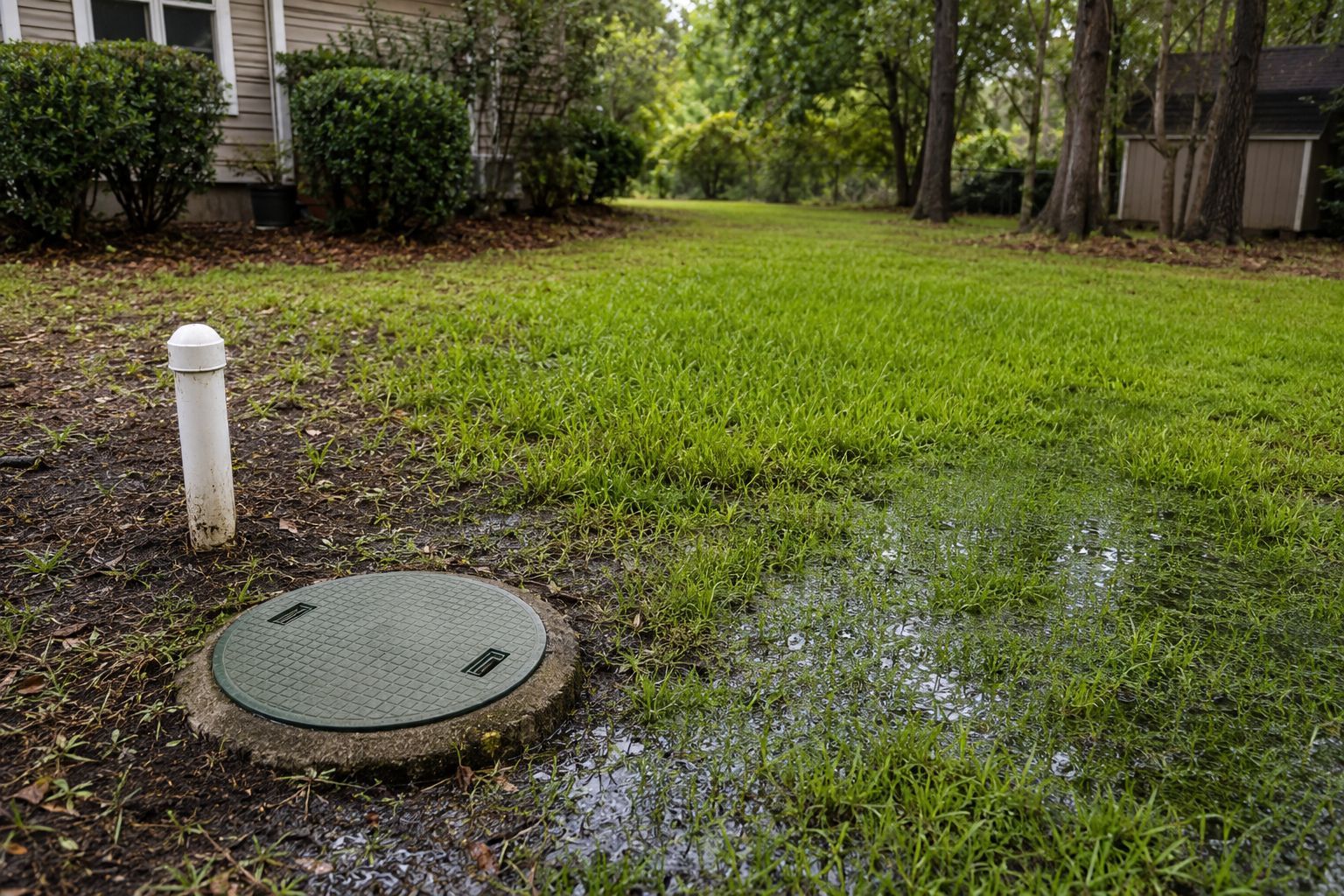
A sewage odor without wet ground often comes from a cracked tank lid, loose riser cover, dry plumbing trap, or venting issue. Because wind and weather affect sewer gas movement, the smell may appear and disappear without leaving visible surface moisture.
Wetness with little or no odor
Soft, soggy ground without a sewage smell is often caused by poor drainage, heavy rainfall, clay soil, or runoff rather than septic failure. Ruling out these surface water sources helps avoid mistaking a drainage problem for a septic issue.
Both together, with grass that won't quit growing
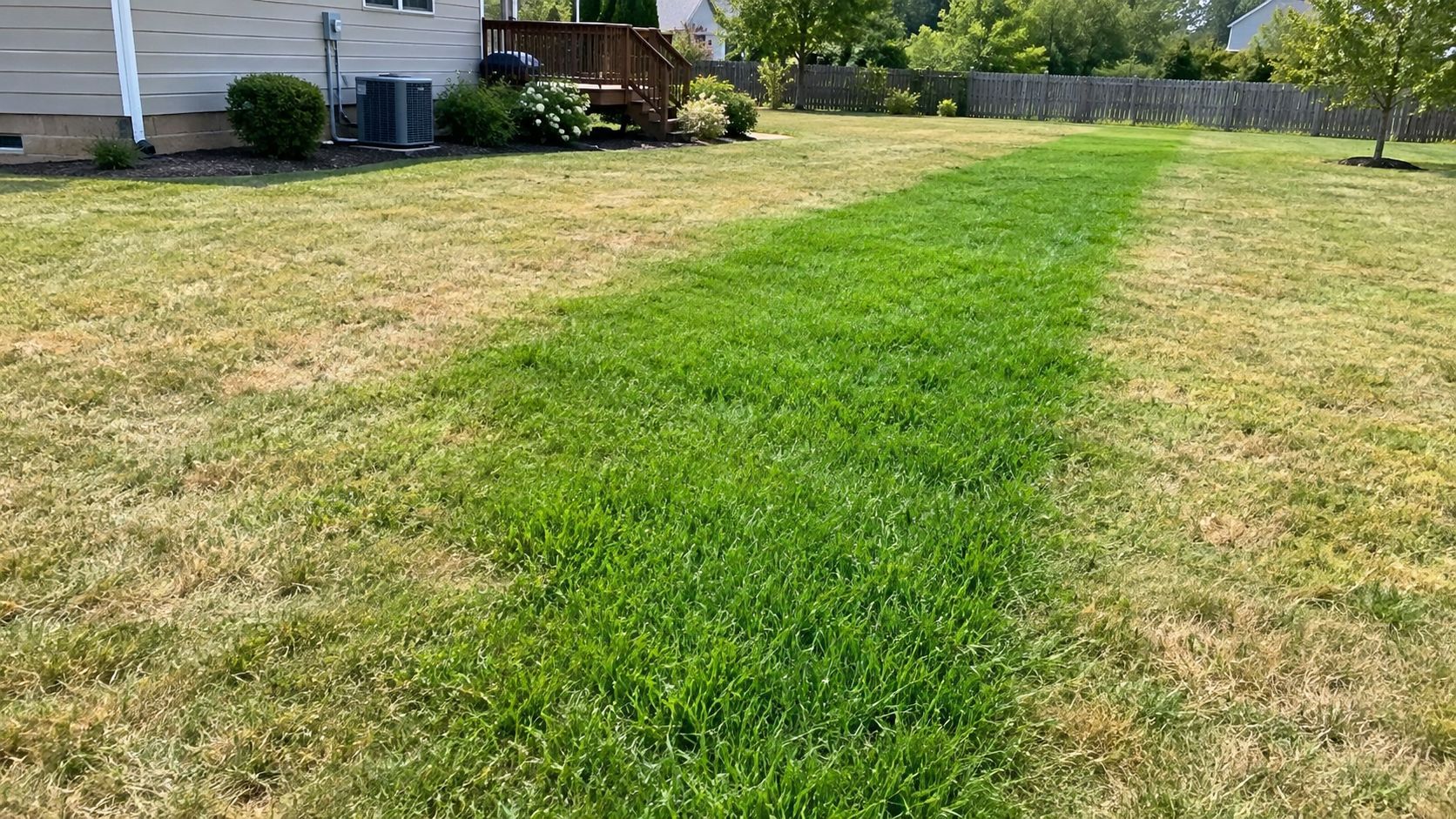
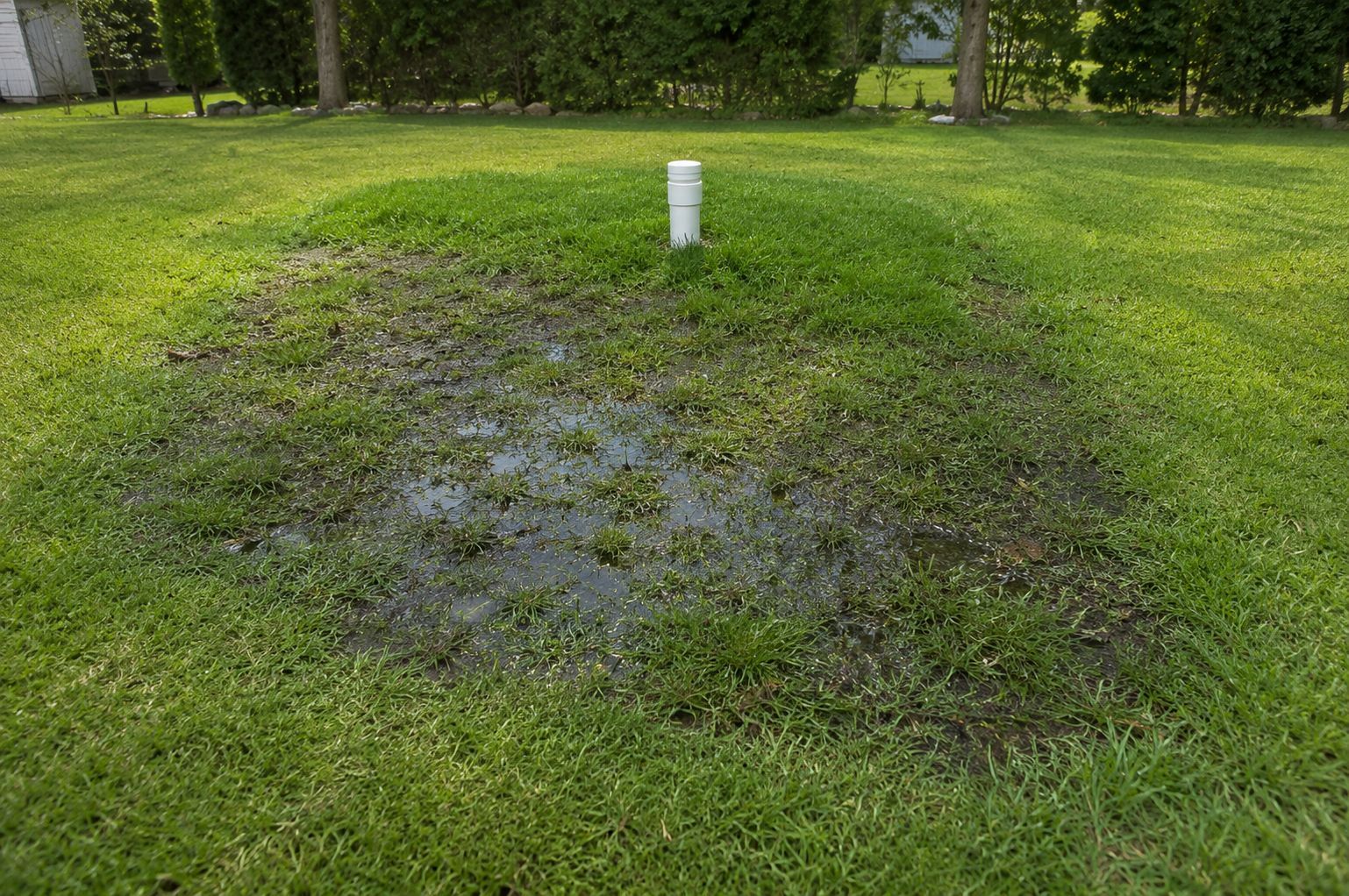
A sewage smell, persistently wet ground, and unusually green, fast-growing grass together strongly suggest effluent is surfacing instead of filtering through the soil. This combination typically indicates the drain field is no longer absorbing wastewater as it should.
What's Actually Failing Underground
A few different things can produce this pattern, and they call for different fixes.
A biomat has choked the trenches
A bacterial biomat naturally forms inside every drain field and helps treat wastewater. When it becomes too thick, usually because excess solids escape the tank, the soil can no longer absorb effluent properly, forcing wastewater toward the surface.
The soil itself has lost capacity
Heavy rain, a high water table, or excessive household water use can saturate the surrounding soil. Even a healthy drain field may struggle temporarily because the ground cannot absorb wastewater quickly enough under those conditions.
A structural problem is letting effluent out early
A cracked tank, damaged baffle, separated outlet, or crushed pipe can release wastewater before proper treatment. This often creates stronger, localized sewage odors and wet areas closer to the tank than the drain field.
A distribution problem is overloading one part of the field
A damaged or uneven distribution box can send too much wastewater into one trench while others remain lightly used. The overloaded section becomes saturated first, creating a localized wet, spongy patch above the field.
Tip: Walk the area after the household has been using more water than usual, such as after a full load of laundry or a long shower, rather than first thing in the morning. Surfacing effluent is often most visible under load, when the system is actively pushing water through, and a spot that looks dry at 7 a.m. can be visibly wet by early evening. Timing your check this way gives you a clearer read before anyone comes out to look at it.
Why This Shows Up Faster on Ground Around Here
Soil does most of the work in a septic system, and not all soil does that work equally well.
Much of the ground around Christiana and the surrounding counties sits on weathered limestone with a layer of dense clay above it. Clay holds water instead of letting it pass through, and where bedrock sits close to the surface, the soil column available to absorb and filter effluent is thinner than it would be on a deep, sandy lot. A field built on ground like this has less margin for error to begin with, so a biomat that would take years to cause trouble in looser soil can create a visible wet spot much sooner here.
Rainfall compounds it. A field that is already running close to its absorption limit has nowhere to send extra water when a heavy rain saturates the soil from above at the same time effluent is trying to move through it from below. That is why a wet patch or a whiff of odor often shows up first, or gets noticeably worse, during a stretch of wet weather, then seems to improve once the ground dries out. The underlying problem did not go away during the dry spell. It just had a little more room to work with for a while.
Warning: Do not pile fresh soil, mulch, or fill dirt over a wet or smelly spot to mask it. That is a common instinct, and it is one of the more damaging mistakes a homeowner can make. Covering the area does not restore the soil's ability to absorb effluent underneath, and it can trap moisture and pressure in a way that pushes sewage to surface somewhere else instead, often closer to the house. Keep the area away from kids, pets, and mowing equipment until it has been evaluated, and never attempt to dig into or open the field lines yourself.
Repair or Restoration: What Actually Fixes This
The right fix depends entirely on which of the above is happening, which is why an accurate diagnosis matters more than a quick guess.
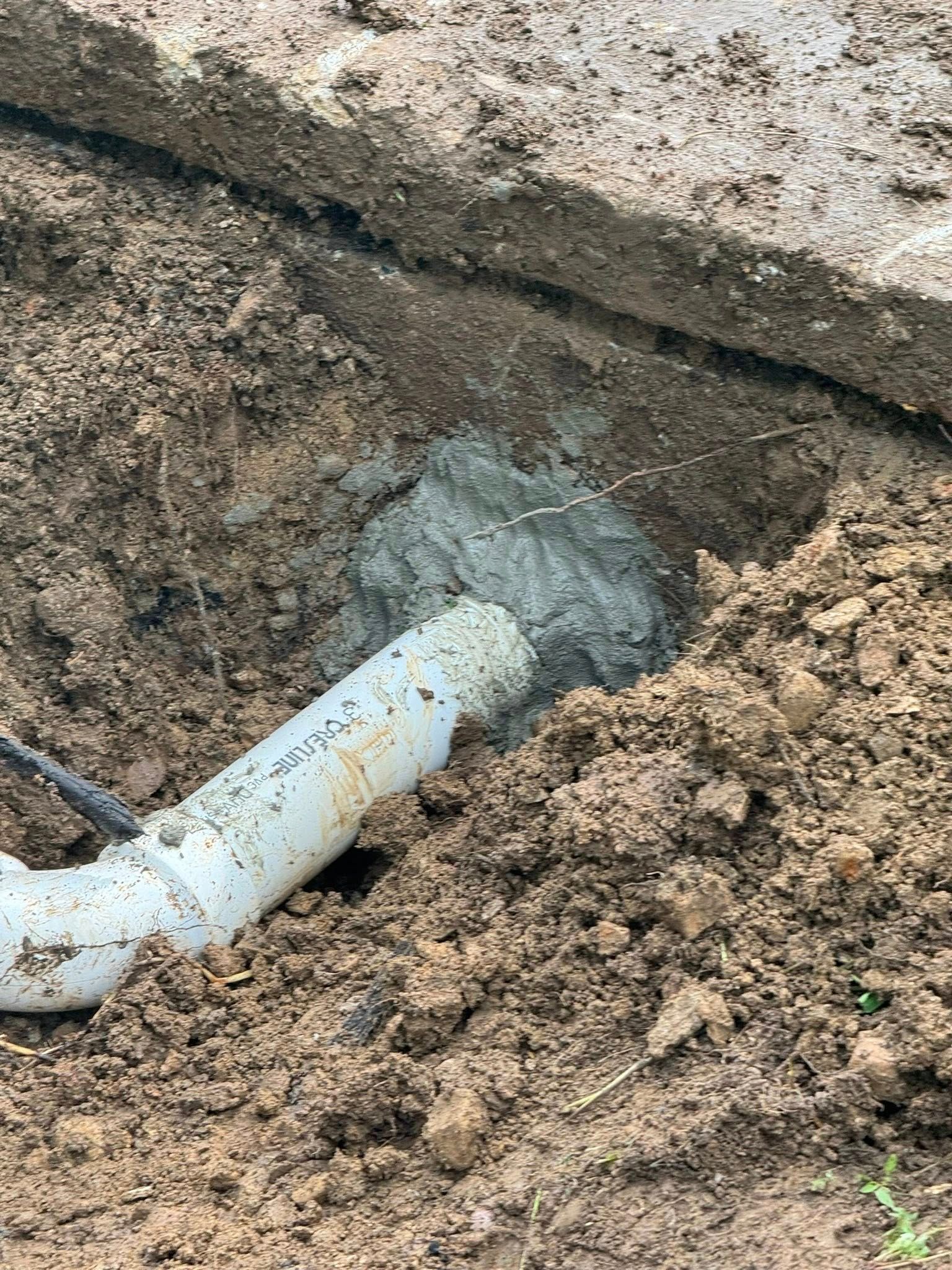
If the problem traces back to the tank itself, a cracked wall, a failed baffle, a separated outlet connection, or a compromised seal, that calls for structural repair. Sealing a crack, replacing a baffle, or restoring a joint stops effluent from bypassing the tank's treatment process and re-establishes the flow balance the rest of the system depends on. Repairs like these are aimed at the source, not the symptom, because a field that keeps receiving under-treated effluent from a damaged tank will keep struggling no matter what happens to the soil around it.
When the tank and its components check out but the field itself is the bottleneck, that points toward restoration rather than tank repair. A biomat that has thickened past what the soil can support can often be addressed directly, reducing the buildup and reopening the pathways effluent needs to disperse. Compacted soil around the trenches can be loosened to restore pore space, and aeration can reintroduce the oxygen a healthy absorption zone depends on. Uneven loading across trench lines can be corrected so one section isn't carrying a disproportionate share of the flow. None of that requires digging up and replacing the field. It requires figuring out exactly what is restricting it and correcting that specific thing.
Full replacement becomes the answer when the soil itself has broken down structurally or the trenches have collapsed, but that is a smaller share of cases than most homeowners assume when they first see a wet, smelly patch of yard. A field caught early, before repeated surfacing has damaged the soil structure underneath, has real odds of being restored rather than rebuilt.
Keeping It From Coming Back
Once the immediate cause is addressed, a few habits go a long way toward keeping the field from surfacing again.
Spread water use out instead of concentrating it. A washing machine running six loads back to back on a Saturday, combined with dishwashers and showers, sends a surge through the system that a field with any existing limitations may not handle gracefully. Giving the tank and field time to process a normal daily load, rather than a compressed weekend load, keeps pressure on the soil more even.
Keep vehicles, livestock, and heavy equipment off the field entirely. Compaction from driving or parking over the trenches reduces the soil's pore space and its ability to absorb water, and it does not take much weight to start that process on ground that is already working hard.
Stay current on tank pumping rather than waiting for symptoms. Solids that escape a tank that has gone too long without service are one of the primary ways a biomat thickens past what the field can support in the first place. A tank on a regular service schedule keeps that material out of the field where it belongs.
If access to the tank has always meant digging to find a buried lid, consider having risers installed at the same time repairs or restoration are done. Bringing the access points up to grade means the tank can be checked on a normal schedule instead of being put off because it is a chore, which matters most on a system that has already shown you it needs watching.
Frequently Asked Questions
Is a sewage smell in the yard always coming from the septic system?
Not always. Sewer gas can escape from a loose cleanout cap, dry plumbing trap, or vent stack. When odor repeatedly appears near the drain field alongside soft ground or greener grass, the septic system becomes the most likely source.
Can a wet patch over the drain field just be rainwater with nothing to do with septic?
Yes. Rainwater, poor grading, downspout runoff, or naturally low areas can leave the ground soggy. A persistent wet patch with sewage odor or unusually green grass is more likely connected to drain field performance.
Why is the grass over my drain field so much greener than the rest of the lawn?
Wastewater contains nutrients that encourage faster, greener grass growth. When one strip stays noticeably lush despite dry weather, it often indicates the drain field is releasing effluent closer to the surface than intended.
If the smell only shows up occasionally, does that mean it's not serious?
No. Intermittent odors often suggest the system is nearing its capacity rather than functioning normally. Weather, household water use, and soil moisture influence when smells become noticeable, but the underlying issue usually remains.
Does a wet spot over the field mean the whole system needs to be replaced?
Not necessarily. Many wet spots result from biomat buildup, uneven wastewater distribution, or temporary soil saturation. Drain field restoration or targeted repairs often resolve the problem without requiring complete replacement of the entire system.
How fast does this need attention once I notice it?
Prompt attention is recommended. Early symptoms often appear long before a backup develops, and addressing the cause quickly can preserve restoration options while preventing ongoing soil saturation and more extensive drain field damage.
Understanding Early Drain Field Warning Signs
Small changes in the yard often reveal septic problems long before wastewater reaches the house. A sewage odor, persistently soft ground, or grass that grows differently from the surrounding lawn each provide useful clues about how well the drain field is performing. Paying attention to these outdoor signs allows underlying issues to be identified while they are still manageable, reducing the likelihood of more extensive damage developing beneath the surface.
In Christiana, TN, Scotts Septic Tank Service
has spent over 60
years working with
septic systems
in the area's varying soil conditions and understands how weather, drainage, and normal system aging influence drain field performance. Knowing whether symptoms stem from a repairable tank issue, uneven distribution, or reduced soil absorption helps homeowners better understand what is happening underground and why early evaluation often preserves more restoration options than waiting for symptoms to worsen.